Power Markets

Tracking how political decisions move markets, reshape corporate behavior, and hit workers’ wallets in real time.
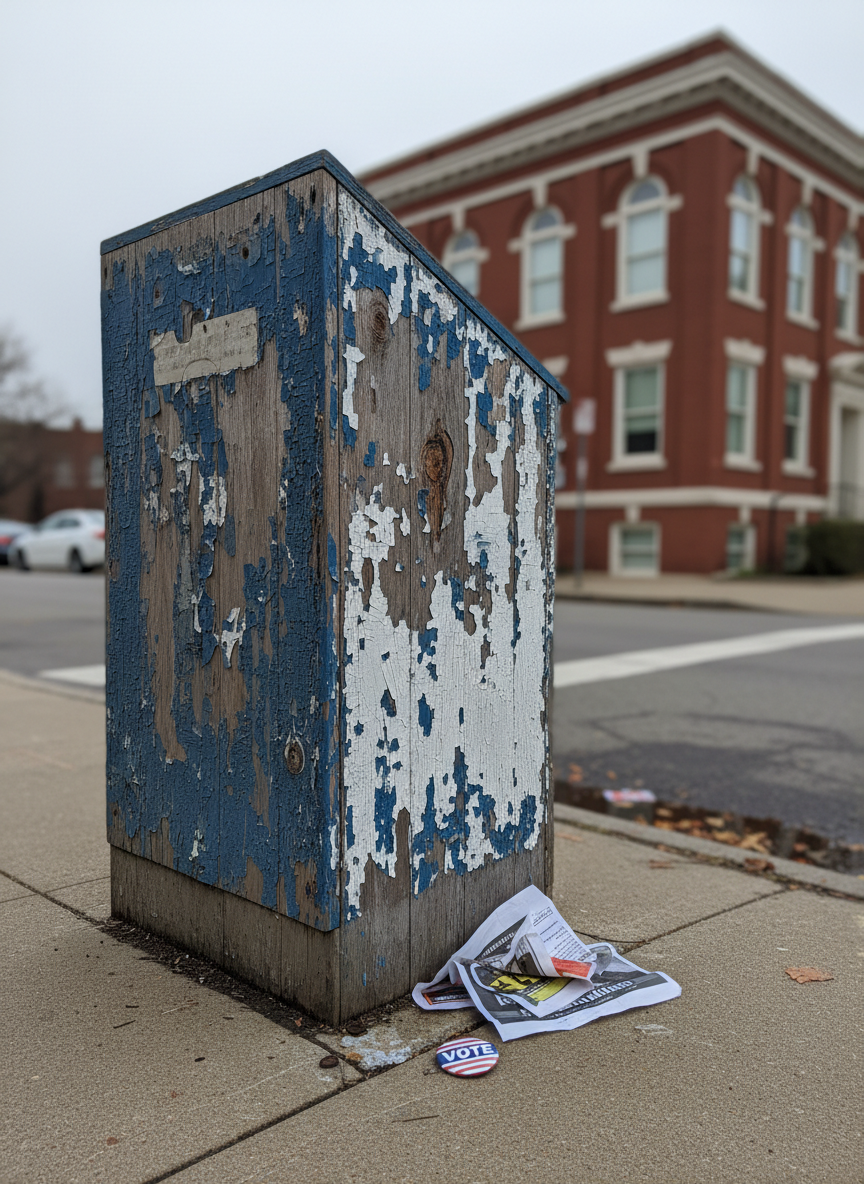
A worn wooden ballot drop box with chipped paint and visible scratches, bolted to a cracked city sidewalk outside a modest municipal building. Scattered flyers and a discarded campaign button lie in the gutter nearby, hinting at a recent, heated election. Overcast daylight creates flat, honest lighting, emphasizing textures and imperfections rather than glamor. Shot at eye level with a slightly wide lens, the box fills the foreground while the blurred outline of the city hall looms in the background. The atmosphere is tense and serious, photographic realism highlighting the unvarnished mechanics of democracy and the quiet, physical point where political power is actually exercised.

Updates

Primers

Explore in-depth primers on political risk, lobbying, and corporate power, connecting campaign cash, regulation, and boardrooms to everyday life, with recurring guides that decode how influence is bought, sold, and resisted.
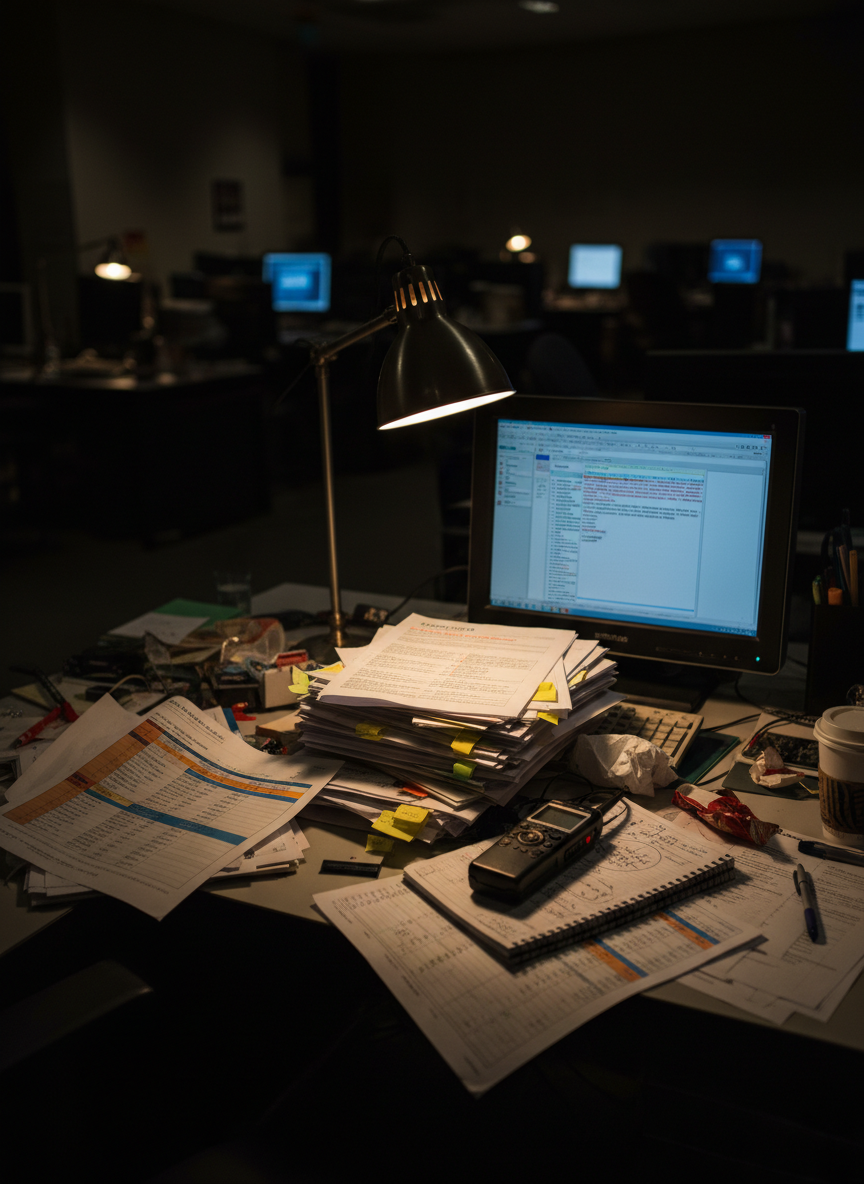
A cluttered newsroom desk late at night, stacked with printed policy drafts, highlighted budget spreadsheets, and a well-used digital audio recorder resting beside a notepad filled with frantic scribbles. An old desktop monitor displays a half-written investigative article with visible tracked changes, though the text is illegible. A single desk lamp throws a harsh cone of warm light over the chaos, while the rest of the room fades into shadow and the faint glow of distant monitors. Shot from a slightly elevated angle with a shallow depth of field, the composition centers the tools of reporting. The mood is urgent, determined, and unpolished, rendered in candid photographic realism.
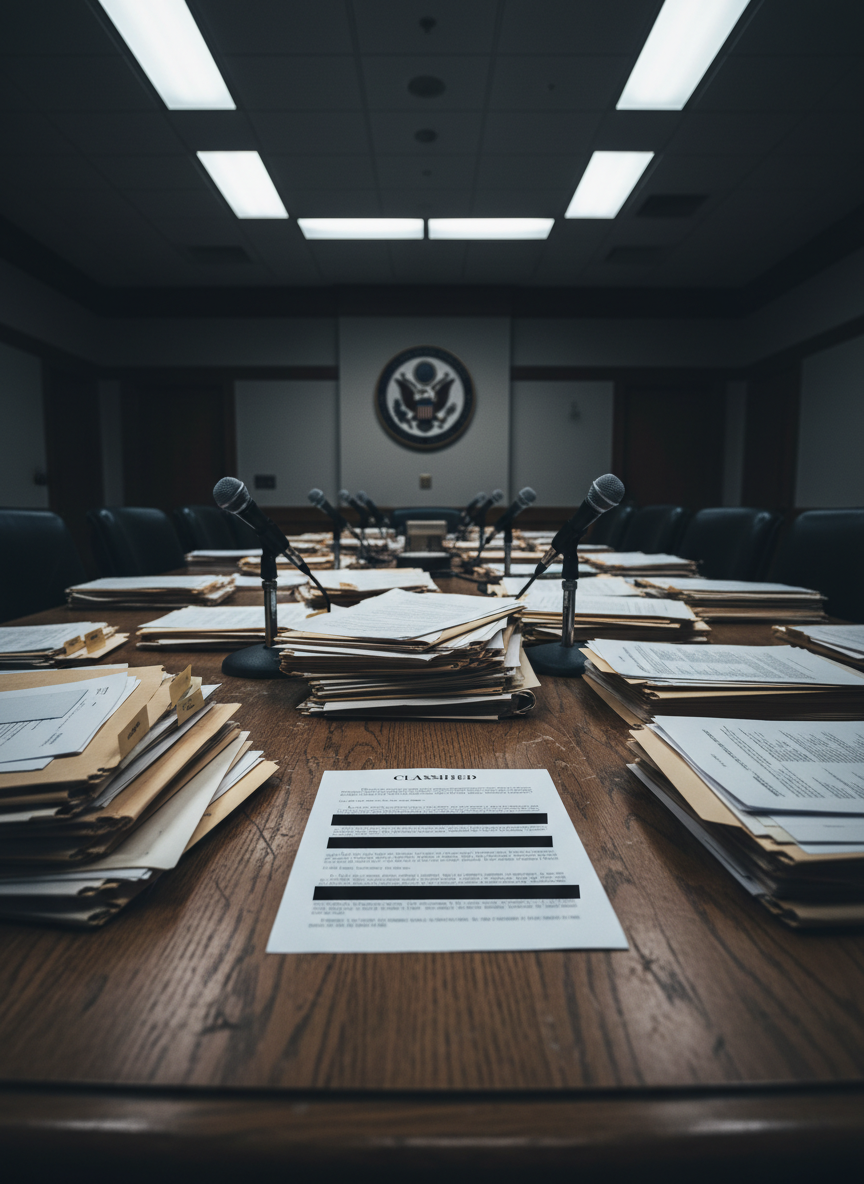
A heavy, scuffed oak conference table in a dimly lit government hearing room, its surface cluttered with overflowing manila folders, printed reports, and a single redacted document with thick, blacked-out lines. Microphones and nameplates are visible but turned away from view, keeping the focus on the evidence. Harsh overhead fluorescent lights cast stark shadows and reveal every crease in the paper, creating a gritty, investigative mood. Captured from a low, close angle at tabletop height, with a shallow depth of field that blurs the distant seal of the institution on the far wall. Photographic realism underscores the sense of accountability and truth-telling under pressure.
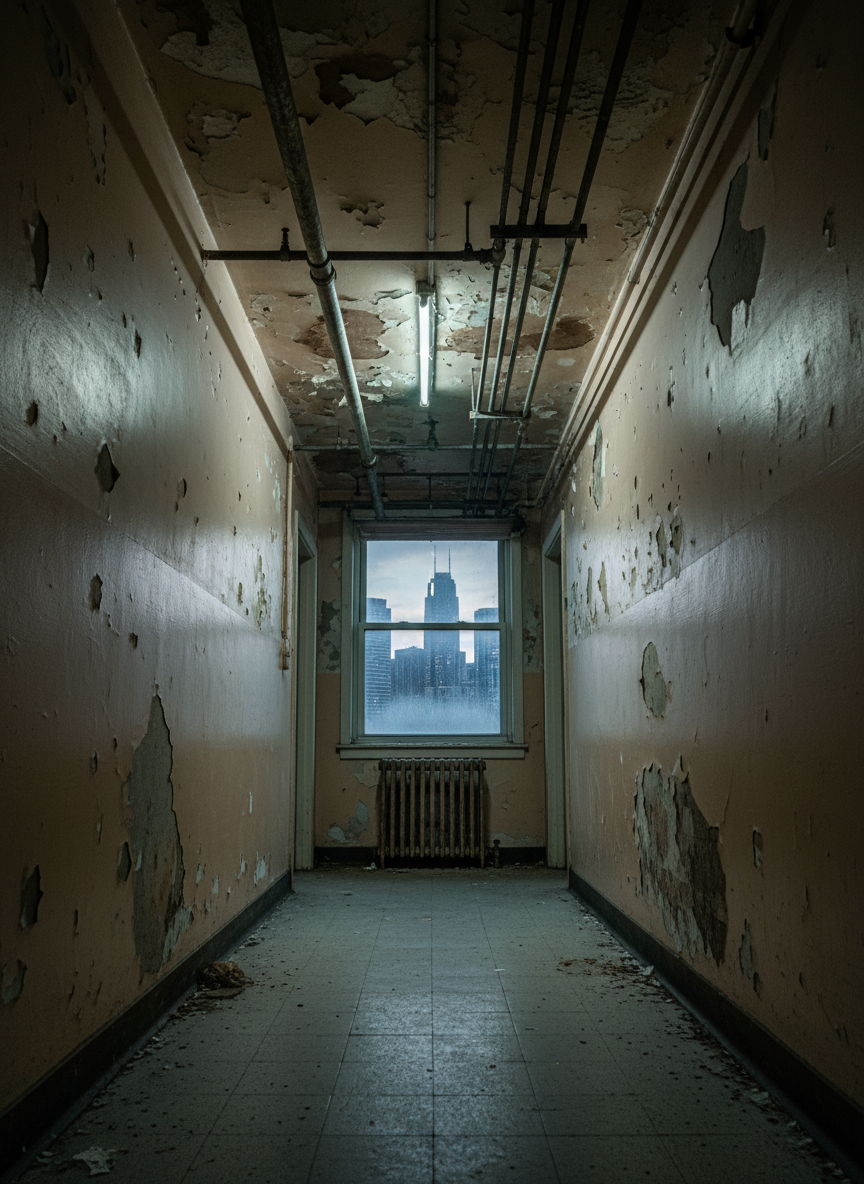
A narrow hallway of a public housing building, with peeling beige paint, exposed pipes overhead, and a flickering fluorescent tube casting cold, uneven light. A leaking ceiling has left dark stains, and a rusted radiator sits beneath a grime-streaked window that reveals the faint silhouette of a gleaming downtown skyline beyond. Shot from a low, centered perspective looking straight down the corridor, creating a strong leading line toward the window. The mood is stark and confrontational, emphasizing the lived consequences of policy decisions. Photographic realism focuses on textures—the cracked linoleum, water damage, and rust—to speak truth to power without showing any people.
A worn wooden ballot drop box with chipped paint and visible scratches, bolted to a cracked city sidewalk outside a modest municipal building. Scattered flyers and a discarded campaign button lie in the gutter nearby, hinting at a recent, heated election. Overcast daylight creates flat, honest lighting, emphasizing textures and imperfections rather than glamor. Shot at eye level with a slightly wide lens, the box fills the foreground while the blurred outline of the city hall looms in the background. The atmosphere is tense and serious, photographic realism highlighting the unvarnished mechanics of democracy and the quiet, physical point where political power is actually exercised.